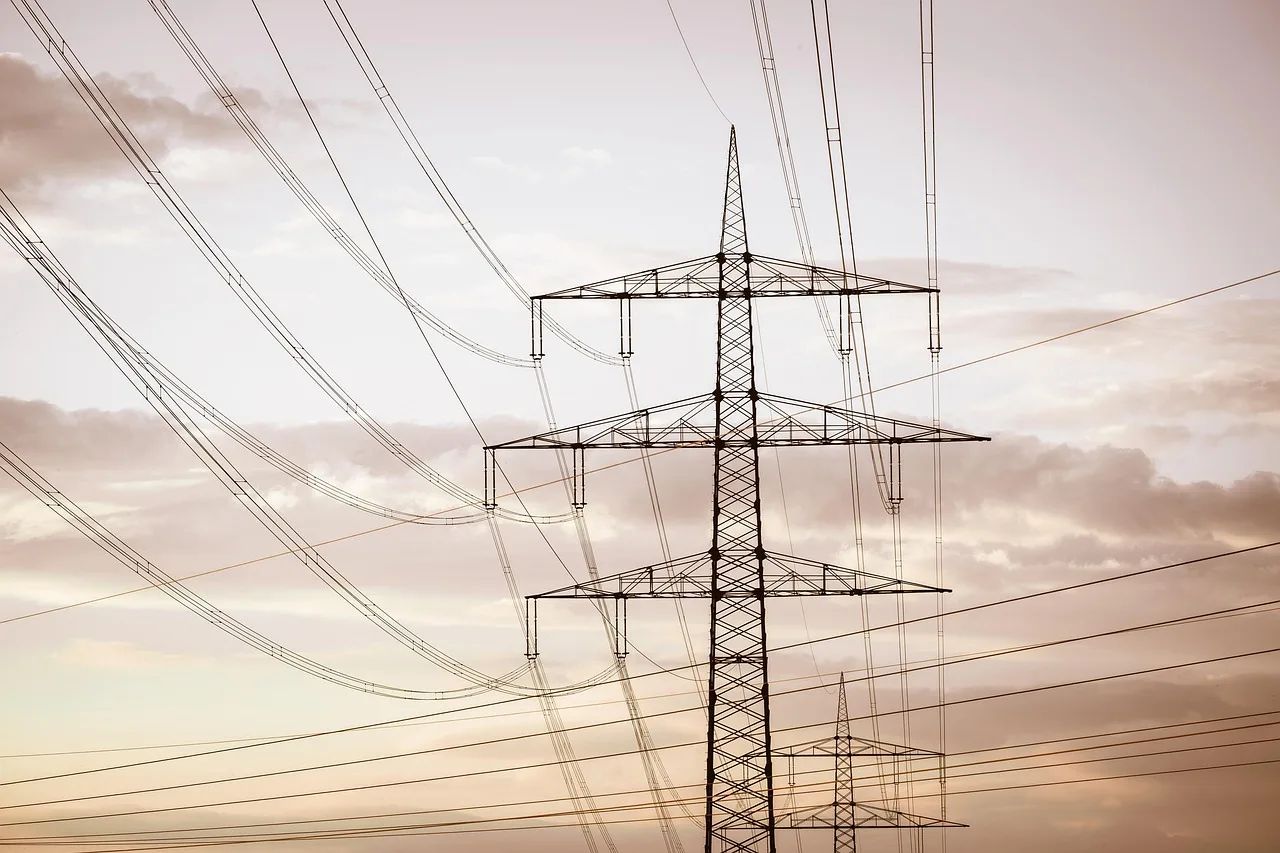
Grid congestion in Europe: why your substation becomes a yield question
Historical period: EU grid review of 1 April 2025 · Data and plans 2023–2025
Topic date:
Published:
In 2025, the European Court of Auditors described the gap between generation build-out and grid infrastructure. Wind and solar projects therefore need an hourly connection review.
A suitable site for wind or solar is not yet a suitable project. You also need a connection that can take the generated energy under the agreed conditions. When the grid is tight, the yield question changes: not only the possible production counts, but also the energy that can actually be fed in. For operators, municipal utilities and project developers, the grid view therefore belongs early in planning. It should not start only once the technical yield assumptions are already fixed.
This article is a historical review of the European Court of Auditors' grid review 01/2025 and the European connection guidance of December 2025. It is published on 5 October 2026. We describe findings, data and planning assumptions from that period. Investment needs mentioned are not expenditure confirmed after the fact. Likewise, historical congestion figures say nothing about the current loading of a specific German substation.
What the Court of Auditors examined
The report is titled "Making the EU electricity grid fit for net-zero emissions". The Court explicitly calls it a review, not an audit report. It is based mainly on publicly available information and material compiled for the purpose. The document describes challenges and options for Europe's electricity grids. This classification matters: the figures and examples help you understand how the system is developing. They replace neither a grid connection decision nor a technical review by the responsible grid operator.
According to paragraph 26 of the review, the Commission estimated the investment needed in electricity grids between 2024 and 2050 at EUR 1,994 to 2,294 billion. This refers to a broad need in the course of the energy transition, including expansion, renewal, more efficient use and adaptation. The upper figure should therefore not be read as a budget purely for climate damage or climate hardening. The Court also points to growing uncertainty in long-term plans and the underlying scenarios.
Why generation and grid drift apart in time
The review describes how grid projects often take longer than new renewable generation assets. Planning, permitting, materials and skilled staff all contribute to this difference. The Commission's guidance on efficient and timely grid connections of late 2025 also identifies this as one cause of connection queues. When generation is ready faster than the infrastructure it needs, delays or limited connection options follow. This is a system question that cannot be solved by a better turbine or a more powerful module alone.
For your project planning, this means that different timelines have to be brought together. When can the park be built? When can it be connected? Which reinforcement is needed? Which interim solution is offered at all? An assumed commissioning date without a traceable connection basis can distort the economic assessment. So separate the date of technical completion from the date of a reliable feed-in option. Document which information is binding and which only describes a planning status.
Distinguish congestion, connection queues and outages
Grid congestion exists when a desired transmission or distribution exceeds the available grid capacity. A connection queue, by contrast, describes projects not yet connected. Besides a lack of physical capacity, it can also result from processing procedures or immature projects. An outage is a different state again, for example after a technical fault. These terms should not be equated. Otherwise you might wrongly conclude from a long queue that an existing park is being curtailed.
In section 1.1 of its guidance, the Commission distinguishes three areas of causes: insufficient grid planning and development, a lack of transparency about available capacity, and connection procedures. These include speculative or stalled requests. A good site review must therefore ask more than "Is the substation full?". It must consider the state of the data, the processing status of your request and possible changes from grid expansion or new projects.
Why an annual amount of energy is not enough
A substation is not loaded only by the annual production of the assets connected to it. What matters is how much power occurs at the same time. Wind parks in a region can experience similar weather. Solar parks can reach high feed-in at the same time of day. Even if the annual amount of energy looks moderate on paper, individual hours can be demanding. Conversely, high installed capacity does not automatically mean that the maximum total flows through the connection permanently.
For a first review, hourly generation profiles are therefore helpful. They show when existing wind and solar capacity act together and when additional capacity could exceed the model limit. The assumed connection or transformer limit is decisive here. If it is only estimated, the result also remains an estimate. A plausible hourly profile does not become a complete grid calculation just because it was computed over many years.
How EnviroTrust's German congestion analysis is built
EnviroTrust simulates hourly feed-in for substations of 100 kilovolts and above in Germany. It is based on the registered wind fleet in the market master data register (MaStR) and solar parks of one megawatt and above. The feed-in is compared with a transformer capacity assumed per voltage class. The model can therefore give indications of loading over time and differences between connection points. Its findings, however, depend on the public register data and the chosen capacity assumptions.
This distinction must stay clear: it is a model built from public data, not grid operator measurements. The model does not replace a full load-flow calculation, that is, a calculation of all electrical flows in the actual grid. Nor does it replace a review of voltage, protection concept and operational safety. Use the results to order sites and questions for the next investigation, not as a binding promise of free connection capacity.
The role of the map
The platform map shows assets, transmission lines of 220 kilovolts and above, the power plant fleet and German substations as connection points. It adds the German congestion layer, flood zones and weather. This lets you look at the generation site, the connection environment and selected hazards together. However, the proximity of a substation does not confirm that this connection is technically or legally possible for your project. The grid operator remains the necessary point of contact for that.
Above all, a map should enable the right discussion. Which connection is planned? Which assets share the connection? Which public information is current? Which figure does the grid operator need to confirm? It makes assumptions easier to see than a plain asset list. If a connection is outside Germany, this German register and congestion analysis is not available as an equivalent Europe-wide function. For such projects, you need the respective national information.
Curtailment is not the same as lost revenue
Curtailment means that possible electricity production is limited. For the economic assessment, you then need to check which amount of energy is affected in which hours and which contract terms apply. A lost megawatt hour should not automatically be valued at an arbitrary annual average price. Nor should you assume compensation as a matter of course. That depends on the type of connection, the contract and the applicable rules, and must be clarified separately.
In paragraph 29, the Court of Auditors cites ACER figures for 2023 of EUR 4.3 billion in congestion management costs and more than twelve terawatt hours of renewable electricity not generated in the EU. These are historical system figures. They are neither your park's costs nor a forecast of its future losses. Your project needs its own assessment that cleanly links the affected hours with your remuneration.
Flexibility as a complement to grid expansion
In paragraphs 40 to 47, the Court describes how flexibility can influence the grid expansion required. This covers different approaches such as adjusted consumption, storage and advanced grid technology. The European Environment Agency also addresses these connections in its report of 25 June 2025. This does not result in a universal substitute for grid expansion. Which measure makes sense depends on the specific congestion, operations and costs.
For project developers in particular, a flexible connection can be an option to review. In that case, feed-in is not firmly guaranteed at all times without restriction. Temporary limits become part of the connection terms. That can open up new possibilities, but it changes the assessment of production and revenue. Whether you should pursue such an option depends on the terms offered, your price and the project costs. This trade-off should be made together with the grid operator and, where appropriate, other experts.
Understanding the analysis on request
For Germany, EnviroTrust offers, on request, an analysis of how much new wind or PV capacity could be added at a substation within defined curtailment limits. It looks at a maximum of two, five or ten percent energy loss through curtailment. Results are given as P50/P90 over the weather years 2017 to 2025 and with a view 20 years ahead under EURO-CORDEX RCP 4.5. RCP 4.5 is a medium emission pathway.
This analysis is not yet part of the app interface. It is an offer on request, not a freely available promise of connection. We do not publish national capacity totals or individual site results from this model. Here, too, the basis is public data and model assumptions, not grid operator measurements. A model value must be checked against the actual grid situation and the specific contract terms before you base a project decision on it.
Which documents improve your connection review
Start with the site, planned technology, capacity and existing connection information. For German parks, a MaStR number is helpful if the asset is already registered. Also note known limits and ongoing discussions with the grid operator. A clear overview should distinguish between a confirmed connection, requested capacity and a first site idea. This avoids a mature project and a non-binding option appearing equally certain in the same plan.
For mixed portfolios, assigning shared connections is also important. In the portfolio, a grid connection can depend on several generating components and at the same time limit the energy they can feed in. You should document this relationship organisationally and technically. If storage is being examined, its role needs to be clarified separately. EnviroTrust lists battery storage as a portfolio asset type, but assesses it through the risk and measures register and offers no separate physical yield model for it.
From a first assessment to a sound decision
A sensible first review does not end with a green or red dot. It ends with a justified work list: which sites deserve a deeper investigation? Which capacity assumption must be confirmed? Where are remuneration or connection terms still open? Which combination of yield and grid limits is economically relevant? This helps you narrow down the next investigation. The order of reviews should not, however, be mistaken for a final ranking for investment.
To assess possible measures, EnviroTrust uses your EEG tariff, your power purchase agreement or day-ahead prices, your investment horizon and your discount rate. Whether a retrofit, a renewal or another measure makes sense depends on your price and the costs; we calculate this question together. The results are planning values, not quotes and not guaranteed savings. A congestion indication alone does not justify an investment.
For the 30-minute call, you send us a park, a MaStR number or an asset list. We show you your asset with yield, climate shift and risks. For grid questions, we clarify which additional analysis on request could make sense. Afterwards, you decide whether a pilot with your portfolio is a fit. EnviroTrust is not a yield assessment, not a grid operator review and not financial or investment advice.
Sources and historical context
- European Court of Auditors: Review 01/2025, in particular paragraphs 15–16 on method, 20–29 on investment and congestion, and 40–47 on flexibility.
- European Commission: Guidance on efficient and timely grid connections, guidance of December 2025, Official Journal C/2025/6703 of 19 December 2025, sections 1.1 and 2.
- European Environment Agency: Renewables, electrification and flexibility, published on 25 June 2025; full report, summary and chapter 3.1.
The sources describe the European framework. The description of the EnviroTrust model is a separate account of our offer and its limits, not a statement by the institutions named about our product.
Discuss your asset with us
30 minutes, online. Send us a park, a MaStR registry number or an asset list in advance. We show you your own asset with yield, climate shift and risks. Then you decide whether a pilot makes sense.